From Holiday Lifesaver to Year-Round Revenue: The Evolution of Gift Cards
Gift cards aren't just for the holidays anymore. Learn how the $950B gift card market evolved and how to capture year-round revenue.
The December Trap
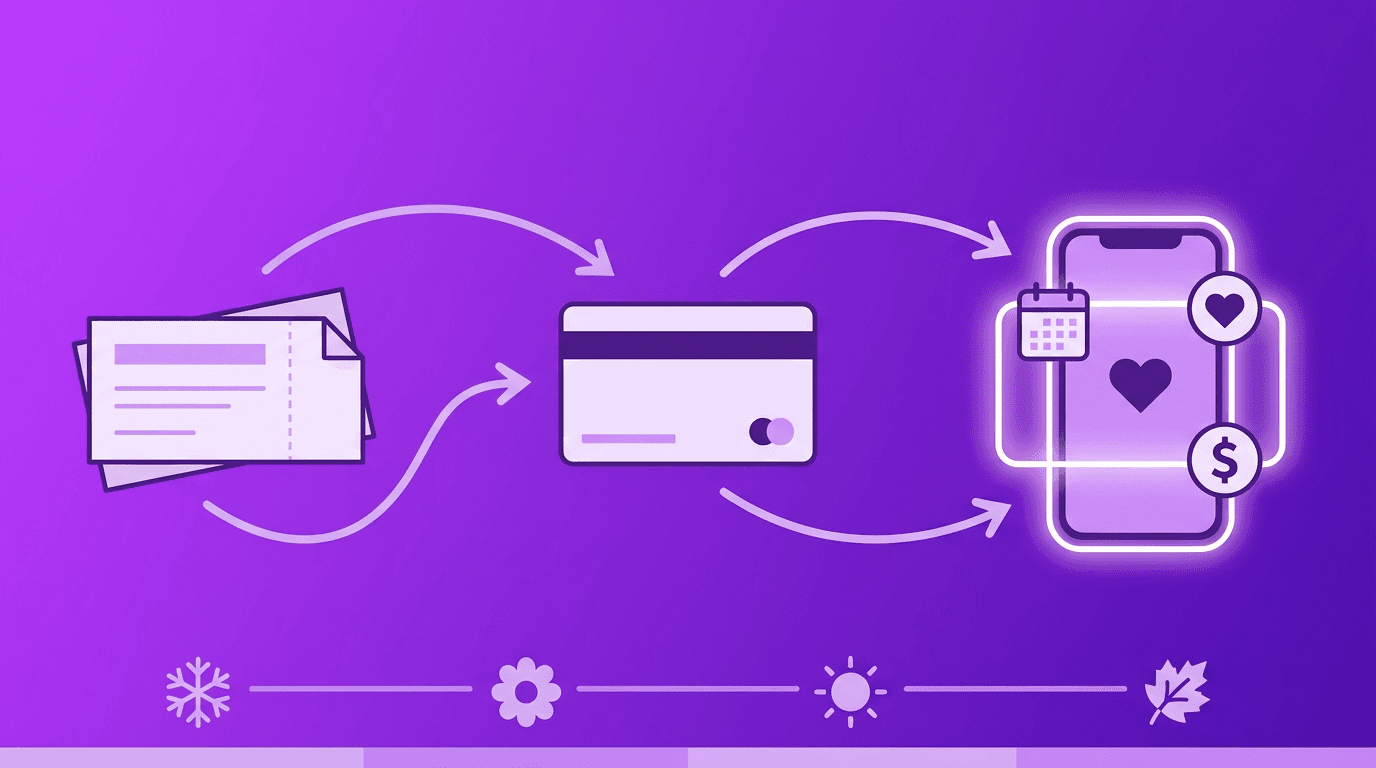
For most of their history, gift cards lived in a narrow window. A shopper, running out of time and ideas in mid-December, would grab a card off a rack or add one to their cart as a last-minute save. The recipient would redeem it in January, and the cycle would go dormant for another eleven months.
That era is over. The global gift card market reached $950 billion in 2024 and is projected to hit $2.3 trillion by 2034. The digital segment alone is growing at a 16.6% compound annual growth rate. Gift cards are no longer a seasonal convenience — they're a strategic revenue channel that smart merchants activate twelve months a year.
This post traces how gift cards evolved from last-minute stocking stuffers to a year-round growth lever — and how your Shopify store can capture that opportunity.
Phase 1: The Physical Card Era (1990s–2010s)
Gift cards as we know them started with Blockbuster in 1994 and went mainstream when major retailers adopted them through the early 2000s. They were simple: a plastic card with a magnetic stripe, sold at the register, usually in fixed denominations like $25, $50, or $100.
The value proposition was straightforward — they were better than cash (because they showed you picked a specific store) and better than a random gift (because the recipient could choose what they wanted). But the format had clear limitations. Physical cards required in-store purchase, couldn't be personalized beyond a generic sleeve, and were geographically bound. You couldn't send a gift card to a friend in another city without putting it in an envelope.
For merchants, physical gift cards were almost entirely a Q4 product. Holiday displays, seasonal promotions, and last-minute shoppers drove the vast majority of sales. The rest of the year, gift card inventory collected dust.
Phase 2: The Digital Shift (2010s–2020)
E-commerce platforms changed the equation. Once gift cards became digital, the constraints that made them seasonal disappeared. A digital gift card could be purchased from anywhere, delivered instantly via email, and redeemed online — no physical card, no envelope, no trip to the store.
This unlocked new use cases beyond the holidays. Birthdays became a natural fit — a friend could buy and send a gift card on the actual day, not days early to account for shipping. Corporate incentives adopted digital cards for employee rewards and customer retention programs. Customer service teams started issuing them as apology credits.
But even as the format went digital, most platforms (including Shopify) kept the experience stuck in the physical-card mindset. The "gift card" was still a product you purchased, received a code for, and manually forwarded to someone. The gifting experience — personalization, scheduling, branded delivery — was an afterthought.
Phase 3: The Experience Economy (2020–Present)
The pandemic accelerated digital gift card adoption by years. With in-store shopping restricted, consumers turned to e-gift cards not just as fallbacks but as primary gifting options. The US gift card market is now valued at $207 billion in 2025 and is expected to surpass $220 billion in 2026.
More importantly, consumer expectations shifted. People don't just want to send a code — they want to send an experience. They want to include a personal message, pick a delivery date that matches the occasion, and know the recipient will see something beautiful when they open it. 71% of consumers now expect personalized interactions from brands, and gift cards are no exception.
This is where the opportunity lies for Shopify merchants. The merchants who treat gift cards as a year-round, experience-driven product — not a seasonal SKU — are the ones capturing this growth. For a detailed look at the numbers, see our 2026 gift card statistics roundup.
Why Year-Round Beats Seasonal
The math is compelling. If your gift card sales are concentrated in November and December, you're leaving at least eight months of revenue on the table. Here's why spreading gift card sales across the year matters:
- Birthdays happen every day. There are roughly 330 million birthdays per year in the US alone. Every one of them is a gifting occasion — and digital gift cards are the fastest, most flexible option for last-minute and long-distance gifters.
- Corporate gifting is year-round. Employee appreciation, client gifts, sales incentives, and onboarding packages happen in every quarter. 60% of executives say gift cards are their top reward format.
- Redemption drives additional spend. Gift card recipients consistently overspend their card balance. Studies show 61% of recipients spend beyond the card value by an average of $31.75. That's incremental revenue you wouldn't have captured otherwise. We break this down further in our post on gift card statistics for 2026.
- Smoother cash flow. Seasonal spikes mean seasonal hiring, seasonal inventory pressure, and seasonal stress. Year-round gift card revenue smooths the curve.
- Customer acquisition. Every gift card sent is an introduction to a new potential customer — the recipient — who may never have discovered your store otherwise.
The Scheduling Unlock
The single most important feature that transforms gift cards from a seasonal product into a year-round channel is scheduled delivery. When a customer can buy a gift card in February and schedule it to arrive on their friend's birthday in April, you've decoupled the purchase from the occasion. The customer buys when they think of it. The gift arrives when it matters.
This is exactly what GoGiftCards was built for. The scheduling engine processes deliveries every 10 minutes and is fully timezone-aware — a card scheduled for March 15th arrives at 8:00 AM in the recipient's local time, not the store's. Combined with personalized greetings, sender names, and branded email delivery, it turns a generic code into a genuine gifting moment.
Shopify's native gift cards, by contrast, don't support scheduled delivery at all. The card is sent immediately upon purchase. If your customer buys a birthday gift card three weeks early, the surprise is spoiled on the spot.
Building a Year-Round Gift Card Strategy
Moving from seasonal to year-round gift card revenue doesn't require a massive overhaul. Here's a practical roadmap:
1. Make Gift Cards Visible Beyond the Holidays
Most stores bury their gift card product deep in the catalog or only promote it in Q4 campaigns. Instead, give gift cards a permanent home in your navigation. Feature them on your homepage. Add a banner on product pages for items that are frequently gifted.
2. Tie Gift Cards to Every Occasion
Create marketing touchpoints around non-holiday occasions: Valentine's Day, Mother's Day, Father's Day, graduation season, back-to-school, and especially birthdays. Email campaigns with subject lines like "Know someone with a birthday this month?" can drive consistent purchases year-round. Use scheduled gift cards for customer milestones to automate this further.
3. Enable Personalization
A code in an email isn't a gift. A personalized card with the sender's name, a heartfelt message, and a branded redemption page is. The more the experience feels like opening a real gift, the more customers will buy — and the more recipients will remember your brand.
4. Activate Corporate and B2B Channels
Reach out to local businesses, HR departments, and corporate buyers. Offer bulk purchasing options and position your gift cards as employee rewards, client appreciation gifts, or event giveaways. GoGiftCards Pro's bulk CSV issuance makes this operationally painless.
5. Track and Optimize
You can't improve what you can't measure. Use email tracking data (delivery rates, open rates, click-through rates) to understand which gift card campaigns resonate. Monitor redemption patterns to identify your best acquisition channel — every redeemed gift card represents a new customer entering your ecosystem.
The Revenue Opportunity Is Year-Round
Gift cards have evolved from a seasonal convenience into one of the most powerful tools in an e-commerce merchant's toolkit. They drive new customer acquisition, increase average order value, smooth cash flow across the year, and — when done right — create memorable brand experiences that turn recipients into loyal customers.
The merchants who will win aren't the ones offering the same generic gift card experience Shopify ships by default. They're the ones investing in scheduling, personalization, branded delivery, and year-round promotion.
Ready to unlock year-round gift card revenue for your store? Start your free 7-day trial of GoGiftCards — plans start at $4.99/mo with no credit card required.
Related Articles

AI Is Becoming the World's Biggest Gift Concierge
Shoppers are asking ChatGPT and Gemini what to buy. Gift cards are the top answer — here's why that matters for Shopify merchants.

Gift Card Personalization in the Age of AI: 5 Trends Shaping 2026
From AI-generated designs to predictive gifting, these 5 trends are reshaping how Shopify merchants personalize digital gift cards.
The Rise of Corporate Gifting: Why B2B Gift Cards Are a $629 Billion Opportunity
The B2B gift card market is projected to hit $629B by 2031. Learn how Shopify merchants can capture corporate gifting revenue.